

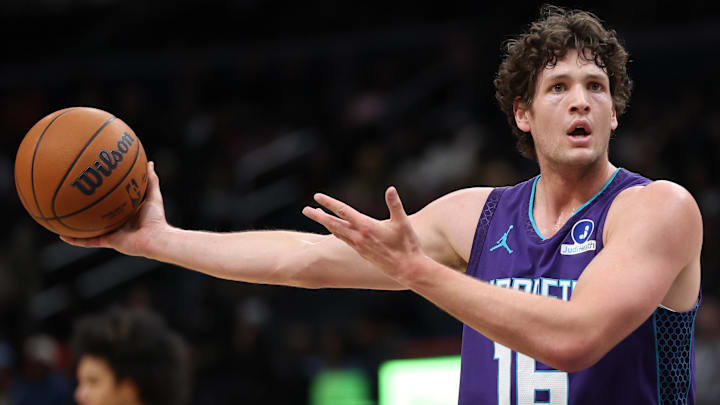
How do you come into an arena with the now reigning champions, take on the statistically most dominant defense in the NBA, and walk out with a 27-point blowout?
If you’re the Charlotte Hornets, you’re not going to do so by using elaborate X’s and O’s or high-tech analytics. Instead, you do it by becoming a goldfish. After a big 124-97 win over the Oklahoma City Thunder, Hornets center PJ Hall exposed the psychological warfare the team used to remain aggressive. A
fter a torrid first half that consisted of 13 turnovers by the Hornets and made them look reasonably beat by OKC’s length, the locker room didn’t panic. They had not even recalled the errors. "We have a lot of guys out there who can shoot," Hall said at the post-game press.
"If you have an opportunity, you have to swing the ball and take it. If you miss the last one, take the next one. Like, having a 'goldfish memory.' I’d say, yeah."
The “goldfish” strategy — ignoring a mistake in a matter of seconds — enabled Charlotte’s shooters to keep firing in the face of the Thunder’s suffocating perimeter pressure. And the strategy helped to pay off by the second half, too. The Hornets broke out from this second half and moved hunting.
They played with what Hall called “pace and urgency,” turning a turnover-happy unit into a high-octane scoring machine that the Thunder just wasn’t capable of understanding how to predict. It was not only about the shots going in; it was about the determination that the misses wouldn’t matter. In a league in which momentum is everything, Charlotte found a way to ensure that negative momentum never stuck.
 Add us as a preferred source on Google