

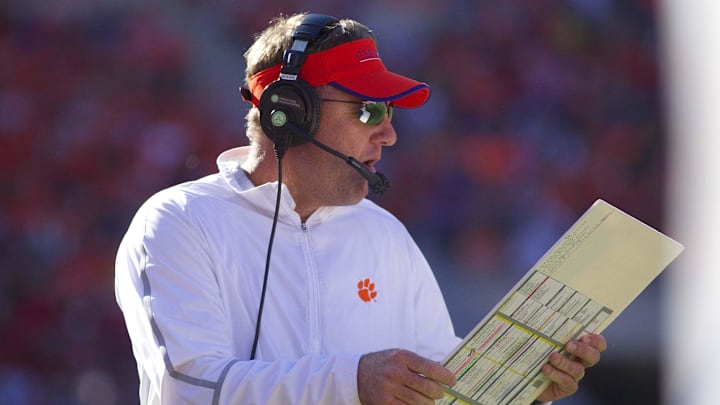
Clemson didn’t just hire an offensive coordinator. It made a statement.
By bringing Chad Morris back to Death Valley, the Tigers signaled urgency — not nostalgia. This move is about speed, familiarity and immediate answers at a moment when patience is thin and expectations remain sky-high.
Clemson’s offense drifted in recent seasons, often searching for identity while the sport accelerated around it. The decision to reunite with Morris reflects a willingness to look backward in order to move forward — reconnecting with principles that once made Clemson dangerous: tempo, spacing and decisiveness at quarterback.
This hire also underscores trust. Swinney knows exactly what Morris brings, both schematically and culturally. There is no learning curve about Clemson’s standards or internal dynamics. That matters in an offseason compressed by transfer windows and roster volatility.
It also suggests Clemson wanted certainty over intrigue. Rather than chasing the next rising name or NFL import, the Tigers chose someone who has already proven he can build an offense in this environment — even if the game has evolved since his first stint.
That evolution is the risk and the bet.
Morris must show that his system can translate to today’s college football, where defenses are faster, personnel turnover is constant and efficiency often outweighs tempo alone. Clemson is betting that experience, adaptability and institutional alignment can bridge that gap.
Ultimately, this move reflects Clemson’s belief that the margin for error is shrinking. The Tigers didn’t need a reset that takes years. They needed one that starts now.
 Add us as a preferred source on Google