

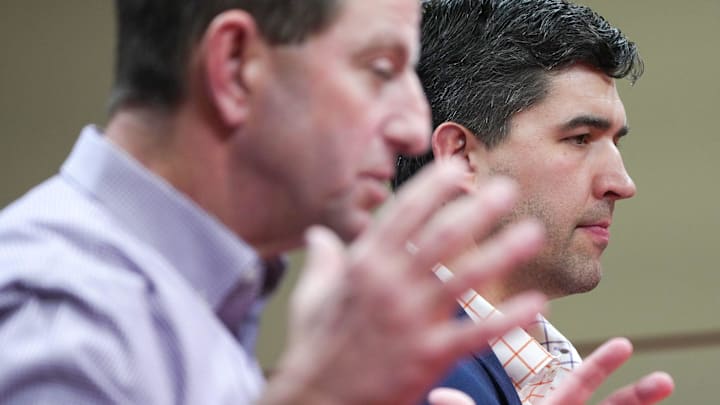
A few weeks ago, Dabo Swinney versus Lane Kiffin, who was a regional scuffle, came to a heads in an ideological war by the college football recruiting of the "Wild West". After Swinney publicly called out Ole Miss in late January, a new ESPN report from a couple of anonymous industry insiders has highlighted what exactly made the Clemson staff so incensed.
The Rebels didn’t merely violate the rules, according to an SEC General Manager, but they committed the so-called “cardinal sin” of the modern era.
The recruiting of star linebacker Ferrelli. Former Cal star and ACC Defensive Rookie of the Year had already made his commitment to Clemson, and now enrolled, and in a head acatcher position physically attending classes when Ole Miss was said to have made their move to flip him. ‘He’s Literally in Class’.
Although “tampering” has taken on newfound hype during the NIL era, insiders told ESPN that the Ole Miss-Clemson incident crossed a formerly unspoken line. “Once the kid gets on campus, that s--- has to stop,” said an SEC GM who spoke to ESPN. To me, that was what’s the cardinal sin in that situation..
An agent followed that sentiment, noting that the timeline was really ridiculous: “He’s literally in class. There’s no way to defend it.". Ferrelli’s change was nothing short of a wild ride: He stepped on the portal in late December, committed to Clemson in early January, joined the defense on campus for the spring semester to begin with. Decommitted abruptly on Jan. 22, he went out and signed with Ole Miss, sealing a hole at the center of Clemson’s projected 2026 defense.
Much of the heat is on Lane Kiffin and defensive coordinator Pete Golding, but some industry voices are pointing the finger back at the Tigers. One agent suggested that in our time, a verbal commitment and attendance alone aren’t enough — programs must secure signatures to deals with monster buyouts right away.
"It’s Clemson’s damn fault that they didn’t get the contract done,” an agent said to ESPN. “If all this is going on, what’s it that’s taking you so long to execute the contract?”.
NCAA VP of Enforcement Jon Duncan warned in a February memo that tampering would incur “significant penalties,” including postseason bans. But the report indicates a real skepticism among GMs and agents.
A lot of people think the existing rules are really "suggestions.". The Drawback: Some GMs claim that only a College Football Playoff ban could deter a program from poaching enrolled players. The Legal Hurdle: A heavy penalty is almost certain to wound up in a courtroom, which has also served to limit the NCAA’s ability to control the sport. As we face the 2026 season,
Ferrelli remains the leading trial case in the modern college football landscape. For Clemson, it’s a bitter reminder that at the end of the day, in the “portal economy,” a player does not truly belong in the league of Tiger until the final whistle of the season.
 Add us as a preferred source on Google