

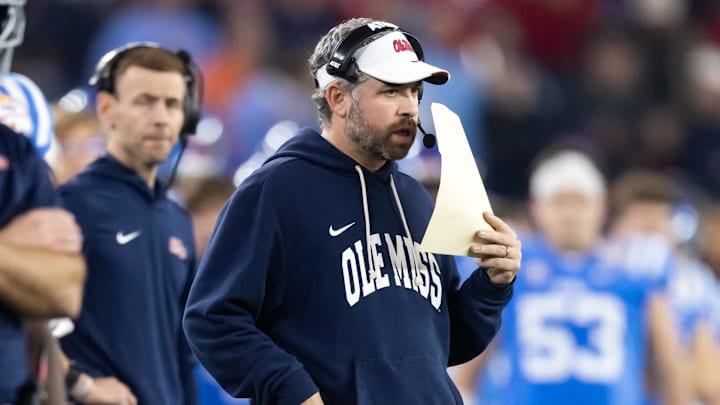
The transfer portal’s “wild west” just went a whole lot wilder — and a lot more personal. And while college football has all but cowered down at the details of behind-the-scenes deal-making in recent years, the feud between Dabo Swinney and Ole Miss is reaching fever pitch.
The epicenter is linebacker Luke Ferrelli, a Cal transfer who previously signed with Clemson who started going to Upstate classes and was then, in a decision that sent shock waves through the industry, moved to Oxford on January 22. Dabo didn’t just grip; he brought receipts. Now the other SEC is making a verdict that ought to get the Rebels very nervous.
One SEC General Manager with whom ESPN conducted an anonymous survey did not hesitate to speak. Although “poaching” players in the portal is now normal operating procedure, the agent claimed Ole Miss head coach Pete Golding would have been guilty of the ultimate "cardinal sin," having continued to "recruit" Ferrelli after he found himself physically seated in a Clemson classroom. “After the kid gets on campus, that s---, that need to stop,” the SEC GM told ESPN.
“That to me was the cardinal sin in that situation.”
And as part of Swinney’s detailed timeline, Golding is said to have texted Ferrelli during his sociology class at 8:00 a.m. and asked him, “I know you’re signed, what’s the buyout?” and included a photograph of a $1 million contract. But an agent stated there is “no way to defend” calling a kid already enrolled elsewhere.
The “cardinal sin” is to the Rebels, but some in industry say Clemson left the door unlocked. There’s been a shortage of administrative urgency at the hands of the Tigers. If Clemson knew the sharks are circling, why has this paperwork not been finalized?
“It’s Clemson’s damn fault for not having the contract done,” wrote one agent on ESPN. “"If you know all this is going on, what's taking you so long to execute the contract?"
In the 2026 landscape of revenue sharing and NIL buyouts, a verbal commitment is in the vast majority of contexts a suggestion. Clemson had mistakenly granted Ole Miss a free pass to increase the cost when it didn’t buy out its player before Ferrelli had even stepped foot onto the practice field.
Indeed, the NCAA VP of enforcement, Jon Duncan, has already written a memo that is indicating “significant penalties” are not out of the question—like a possible six-game suspension for offending head coaches and a 20% penalty for the school’s entire football budget. But for many GMs, seeing is believing. After decades in which the NCAA has been inoperative in court, there is considerable skepticism that a “reckoning” is imminent.
A number of Big 12 GMs are agitating for postseason bans for tampering, claiming that without “functional repercussion,” the poaching will never end. Another agent, The Cynical View: "The rules are just a suggestion for now. Whether or not the NCAA fines it, it’s probable to follow a case of law that lasts longer than Ferrelli’s college career ends.
Whether it will be the "layup" event that cures the problem of the college football track—or just another appendage and footnote in portal era -- what we can ensure is that the bridge between Clemson and Ole Miss is now not only burnt, it has been nuked.
 Add us as a preferred source on Google