

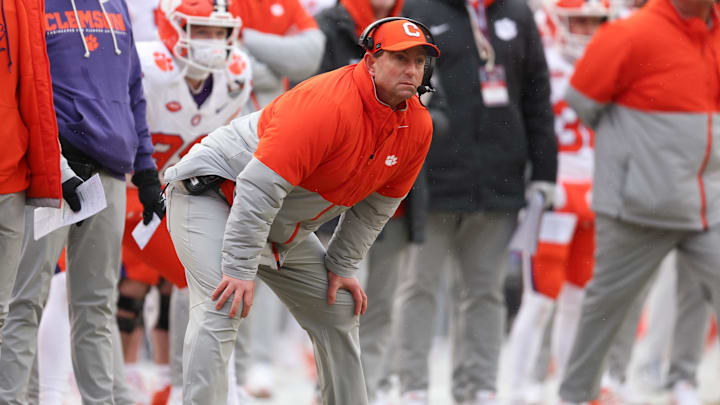
Dabo Swinney’s name for years came to symbolize a “high school first” recruiting approach that ignored the transfer portal. In 2026 when the Tigers are back on the field to practice for the spring game, however, this narrative officially changed.
Swinney said the program has received 10 transfers this spring, the most the program had ever seen in its history, and the list now accounts for about 30 “new faces” on the roster, including high school mid-years.
“This has really been 25 as far as just true new guys,” Swinney said. “This obviously is the most transfers we have had come in. I’m really happy to get on the field with them.”
Swinney noted quickly that this was not a chaotic jumble, but instead a “strategic and collaborative” process by the coaching staff and an evaluation team headed by Kevin Kelly. The aim was clear: discover veterans who could be “peer-on-peer” proven.
Swinney said that while he loves his high school recruits — who he added to the roster this January, bringing in 15 mid-years — the reality of the modern game is that it requires filling some gaps with talent already in store. “You see it easier to [their value] on tape because it’s peer-on-peer. But they hadn’t been at Clemson yet, so I’m looking forward to seeing them get acclimated.”
The influx of transfers complements a roster that Swinney maintains continues to be built on retention. Yet despite the newcomers, Clemson continues to be among the national leaders in player retention, with 35 players with starting experience and 60 with College Football Playoff experience. The "mixture," as Swinney refers to it, is meant to provide the most perfect mix between veteran leadership and fresh, hungry talent.
 Add us as a preferred source on Google