

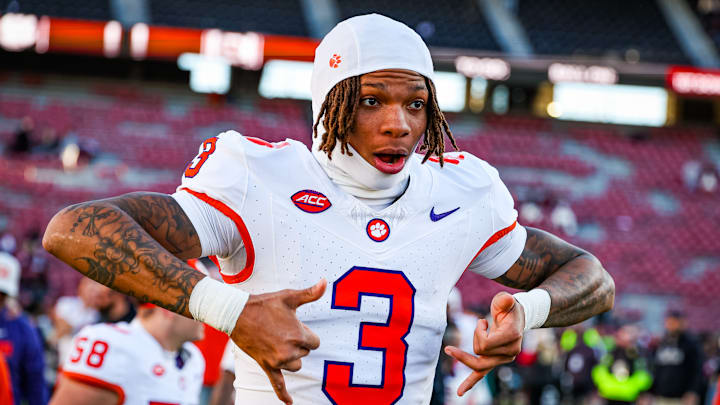
The path remains complicated, but Clemson Tigers wide receiver Tristan Smith took a meaningful step forward in his fight for an extra year of eligibility.
Smith, who filed suit against the NCAA this week, is seeking an injunction that would allow him to participate in Clemson’s 2026 season while his eligibility case proceeds through the courts. Although a temporary restraining order was denied, a key hearing on Smith’s request for a temporary injunction is scheduled for early February — and the language from the court suggests the door remains open.
That distinction matters.
Smith’s original request for an additional season was denied by the NCAA in November, prompting legal action after he exhausted administrative remedies. His lawsuit argues that the NCAA’s application of eligibility rules, particularly those involving junior college participation, has been inconsistent and unfairly applied.
The court’s written order denying the restraining order stopped short of rejecting Smith’s broader claims. In fact, the judge noted that the NCAA’s denial appeared “arbitrary and capricious,” echoing language used in similar cases nationwide.
If Smith is granted a temporary injunction at the upcoming hearing, he would be allowed to remain with the team for practices and roster planning — a critical factor as Clemson prepares for spring football and long-term personnel decisions.
Why this case matters beyond Clemson
Smith’s situation fits into a growing national pattern. Courts have increasingly shown a willingness to intervene when NCAA eligibility rulings appear inconsistent, particularly in cases involving junior college transfers.
Smith spent two seasons at Hutchinson Community College before continuing his career at the FBS level — a path shared by several athletes who have successfully challenged eligibility limits in recent years. Similar cases have resulted in extra seasons being granted, often after judges questioned whether the NCAA applied its rules evenly.
Smith is represented by sports business attorney Darren Heitner, whose clients have previously secured additional eligibility under comparable circumstances. That history adds credibility to a case that now hinges less on precedent and more on timing.
What Clemson is watching closely
From Clemson’s perspective, the ruling carries practical implications. Smith, a 6-foot-5 target who started multiple games last season, provides experience and depth in a receiver room undergoing transition. Even the possibility of his return affects scholarship planning, position battles and spring rotations.
For now, Clemson waits.
The restraining order may be denied, but the lawsuit is alive — and the most important decision is still ahead.
 Add us as a preferred source on Google