

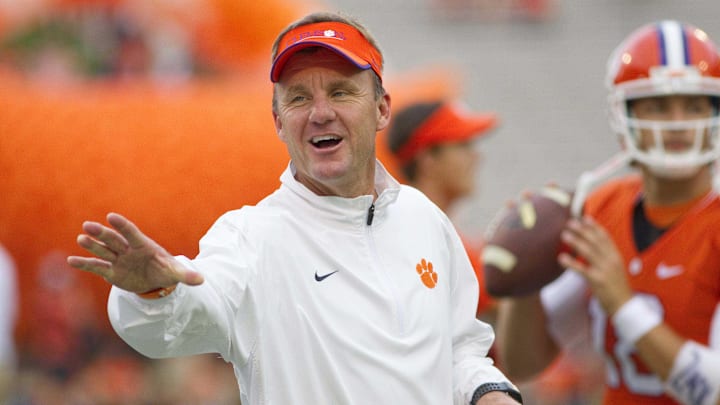
This isn’t a reunion tour.
Clemson didn’t bring back Chad Morris to relive the glory days. It did it because the program wants control again — over tempo, identity and outcomes.
For years, Clemson dictated games. Recently, it reacted to them. The offense searched for answers while the sport sprinted forward. This hire says Clemson is done experimenting with uncertainty.
Morris represents something Clemson has lacked: decisiveness. His offenses were clear in purpose, aggressive by design and unapologetic in execution. You always knew what Clemson wanted to be — and so did opponents.
Is the hire safe? Yes. Is it bold? Also yes.
Safe because Swinney knows exactly who he hired. Bold because it invites scrutiny. If this works, Clemson looks decisive. If it doesn’t, the questions will be louder than ever.
That’s the edge of this move. Clemson didn’t hide from it. The Tigers leaned into it.
This isn’t about going backward. It’s about reclaiming what once made Clemson dangerous — clarity, confidence and conviction.
And in today’s college football, that might be the boldest move of all.
By the Numbers: Revisiting Clemson’s Offensive Peak Under Chad Morris
CLEMSON, S.C. — Numbers don’t explain everything in college football, but they do reveal patterns. And when Clemson looks back at its most formative offensive era, the statistical footprint of Chad Morris is unmistakable.
During Morris’ first run as offensive coordinator from 2011 through 2014, Clemson transformed from a talented but inconsistent offense into a nationally feared unit. The raw production reflected more than just improvement — it reflected identity.
Across those four seasons, Clemson averaged more than 40 points per game twice and never dipped below 34. The Tigers routinely finished inside the national top 15 in scoring offense, a leap from the middle-of-the-pack results that preceded Morris’ arrival.
Quarterback play surged. Clemson passers during that span combined for prolific touchdown totals and efficiency marks that reset program expectations. Wide receivers thrived in space, routinely producing 1,000-yard seasons and stretching defenses horizontally and vertically. Explosive plays were not occasional — they were expected.
Tempo was the multiplier. Clemson consistently ranked among the nation’s leaders in plays per game, forcing defensive depth to matter and turning late-game situations into advantages rather than vulnerabilities. Fourth quarters often widened margins instead of shrinking them.
Perhaps most telling: Clemson’s red-zone efficiency improved dramatically under Morris. Drives did not stall into field-goal attempts. They ended with touchdowns. That conversion rate became a separator in ACC play and positioned Clemson as a program that punished mistakes.
The numbers also intersected with results. During Morris’ tenure, Clemson won an ACC championship, reached major bowl games and finished ranked in the final polls each season. Statistical growth translated directly into wins, not hollow production.
Context matters, too. That offensive surge helped elevate Clemson’s recruiting profile, attracting skill players who wanted to play fast and showcase their abilities. The pipeline created during those years became foundational for the championship teams that followed.
As Clemson turns back to Morris, the numbers don’t guarantee a repeat. But they do explain why the program believes the ceiling exists again. When Clemson last felt overwhelming offensively, the data supports it.
 Add us as a preferred source on Google